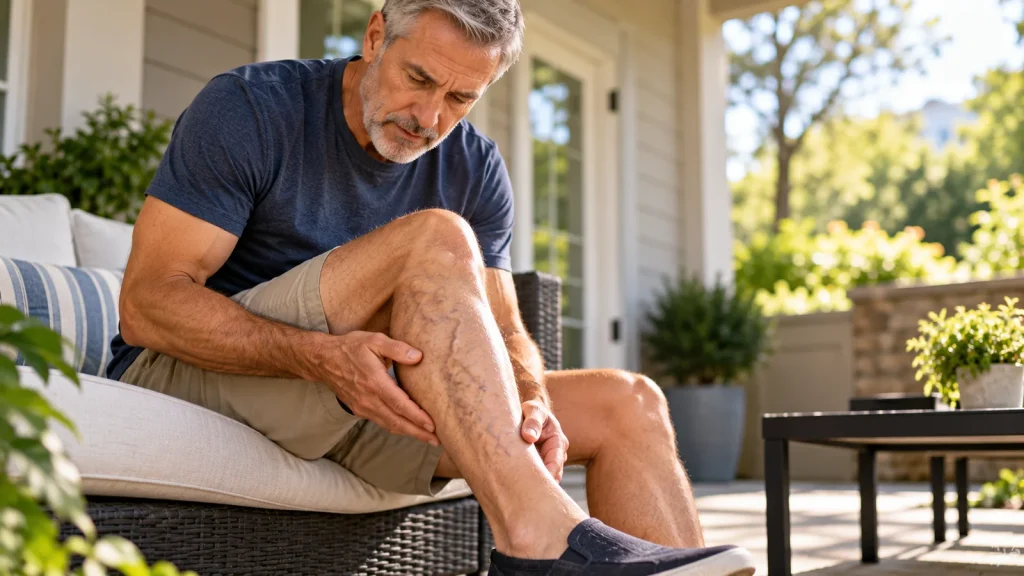
You notice a raised, twisting vein along your calf. Maybe it has been there for years, or perhaps your legs have recently started feeling heavier after a long day on your feet.
Varicose veins are often discussed as a cosmetic concern, but they can also affect comfort, mobility, and skin health. And although they are more common in women, men develop them too.
For men over 50, knowing which symptoms are worth checking and what treatments actually help can make a meaningful difference.
What Are Varicose Veins?
Varicose veins are enlarged, twisted veins that usually develop just beneath the skin of the legs.
Healthy leg veins contain one-way valves that help move blood back toward the heart. When these valves do not close properly, blood can flow backward and increase pressure inside the veins. This is called venous reflux.
Over time, the affected veins may stretch, become more visible, and cause symptoms.
Varicose veins are part of a broader group of conditions known as chronic venous disease. Some people have visible veins without significant discomfort, while others develop persistent symptoms or complications.[1]
What Do Varicose Veins Look and Feel Like?
Varicose veins commonly appear as bulging, rope-like, or twisting veins beneath the skin. They may look blue, purple, or similar to the surrounding skin tone.
They are most often noticed on the calves, behind the knees, or along the thighs.
Common symptoms include:
- Heavy or tired legs, especially toward the end of the day.
- Aching, throbbing, or a feeling of pressure.
- Itching or irritation around affected veins.
- Swelling around the ankles or lower legs.
- Discomfort after prolonged standing or sitting.
- Skin changes near the ankles in more advanced cases.
Symptoms may improve when you walk, move your legs, or elevate them. However, visible varicose veins do not always cause pain, and the appearance of a vein does not reliably indicate how serious the underlying problem is.
Why Do Men Develop Varicose Veins?
Several factors can increase the likelihood of developing varicose veins.
Age and Family History
Varicose veins become more common with age. Changes in vein walls and valves may make it harder for blood to return efficiently from the legs.
Family history also matters. If close relatives have varicose veins, your likelihood of developing them may be higher.
Long Hours Standing or Sitting
Jobs that require prolonged standing or sitting can contribute to venous pressure in the legs.
Movement activates the calf muscles, which help pump blood upward. Remaining still for long periods reduces this assistance.
Excess Body Weight
Carrying excess weight can increase pressure on the veins in the lower body and may contribute to symptoms or progression of venous disease.
Previous Blood Clots or Leg Injuries
A previous deep vein thrombosis (DVT) can damage venous valves and contribute to chronic venous problems.
Some leg injuries or prior procedures may also affect venous circulation.
These factors do not guarantee that varicose veins will develop, but they can help explain why some men experience more significant symptoms than others.[2]
Are Varicose Veins Dangerous?
Many varicose veins remain uncomplicated. However, chronic venous disease can sometimes lead to problems that deserve medical attention.
Skin Changes and Venous Ulcers
Persistent venous pressure may cause skin discoloration, inflammation, itching, or thickening around the lower legs.
In advanced cases, venous ulcers can develop, commonly near the inner ankle. These wounds may be slow to heal and require specialized care.
Superficial Venous Thrombosis
A clot can form in a vein near the skin's surface, causing a tender, red, warm, or firm area along the vein.
This condition, called superficial venous thrombosis, is different from DVT. However, some cases can extend into deeper veins, so new symptoms should be assessed promptly.
Bleeding From a Varicose Vein
Occasionally, a superficial varicose vein can bleed after a minor injury or skin break.
Bleeding may be significant. Apply firm, direct pressure and elevate the leg. Seek urgent medical care, particularly if bleeding does not stop or recurs.
Important: Having varicose veins does not mean you will develop a dangerous blood clot. However, sudden swelling, new leg pain, warmth, or redness should never be dismissed simply because varicose veins are already present.
How Are Varicose Veins Diagnosed?
A healthcare professional may examine your legs while you are standing, ask about symptoms, and check for swelling or skin changes.
If symptoms suggest significant venous disease or treatment is being considered, a duplex ultrasound is commonly used.
This noninvasive test evaluates blood flow, identifies venous reflux, and helps determine which veins are affected.
Ultrasound findings help guide treatment decisions, especially when procedures are being considered.[1]
Treatment Options for Varicose Veins in Men
Treatment depends on how much the veins bother you, whether there are complications, and the results of a vascular assessment.
1. Movement and Daily Habits
Regular walking, avoiding long periods of inactivity, maintaining a healthy weight, and elevating the legs when resting may help reduce discomfort.
These habits support circulation but generally do not make established varicose veins disappear.
2. Compression Stockings
Graduated compression stockings apply controlled pressure to the legs and may help relieve swelling, aching, and heaviness.
They can be useful when conservative management is appropriate or when a procedure is not preferred or suitable.
Compression is not appropriate for everyone. People with possible peripheral artery disease may need arterial circulation testing before using medical-grade compression.
For suitable patients with symptomatic venous reflux who want treatment, guidelines generally favor appropriate vein intervention over requiring long-term compression as the only approach.[1]
3. Endovenous Thermal Ablation
Endovenous laser ablation and radiofrequency ablation use heat delivered through a catheter to close an affected vein.
These minimally invasive procedures are commonly performed without a large surgical incision.
Blood is redirected through other functioning veins after the treated vein closes.
4. Foam Sclerotherapy
Sclerotherapy involves injecting a treatment solution into a vein, causing it to close over time.
Ultrasound-guided foam sclerotherapy may be used for certain varicose veins, depending on their size, location, and anatomy.
5. Phlebectomy and Other Procedures
Ambulatory phlebectomy removes selected surface varicose veins through very small skin openings.
Other approaches, including nonthermal ablation and surgery, may be considered based on vein anatomy, available expertise, and individual preferences.
A vascular specialist can explain the expected benefits, recovery, risks, and possibility of new or recurrent varicose veins after treatment.[3]
Can Varicose Veins Be Prevented?
There is no guaranteed way to prevent varicose veins, particularly when age and family history play a role.
However, regular physical activity, avoiding prolonged immobility, and managing body weight may help support leg comfort and venous health.
If your job involves standing or sitting for hours, try to incorporate short movement breaks throughout the day.
These measures may reduce symptoms, but they cannot reliably prevent every case or reverse veins that are already enlarged.
When Should You See a Doctor?
Schedule a medical evaluation if varicose veins cause persistent aching, heaviness, itching, swelling, or interfere with everyday activities.
You should also seek assessment for skin darkening, eczema-like changes, hardening of the skin, or a wound near the ankle that is not healing.
Seek Prompt Medical Care
New, unexplained swelling in one leg, especially with pain, warmth, or redness, may indicate DVT and needs prompt assessment. A newly painful, red, hard vein may indicate superficial venous thrombosis and should also be evaluated. If a varicose vein bleeds, apply firm direct pressure with the leg elevated and seek urgent help.
Seek Emergency Care Immediately
Call 911 for sudden shortness of breath, chest pain, coughing up blood, or fainting, especially when accompanied by leg symptoms. These may be signs of a pulmonary embolism. Uncontrolled bleeding from a vein also requires emergency assistance.
The Bottom Line
Varicose veins in men are common enough to deserve attention, particularly after 50. They may be painless and mainly visible, or they may cause heaviness, aching, swelling, and skin problems.
Not every varicose vein needs treatment. But persistent symptoms and skin changes should not be ignored.
With an appropriate evaluation, men can choose from practical symptom-management strategies and effective medical procedures when needed.
Medical References
- Society for Vascular Surgery, American Venous Forum, and American Vein and Lymphatic Society. The 2023 Clinical Practice Guidelines for the Management of Varicose Veins of the Lower Extremities, Part II. Journal of Vascular Surgery: Venous and Lymphatic Disorders. 2024. Read the guideline.
- National Heart, Lung, and Blood Institute (NHLBI). Varicose Veins. National Institutes of Health. Read the NIH resource.
- National Institute for Health and Care Excellence (NICE). Varicose Veins: Diagnosis and Management. Clinical Guideline CG168. Read the NICE guideline.