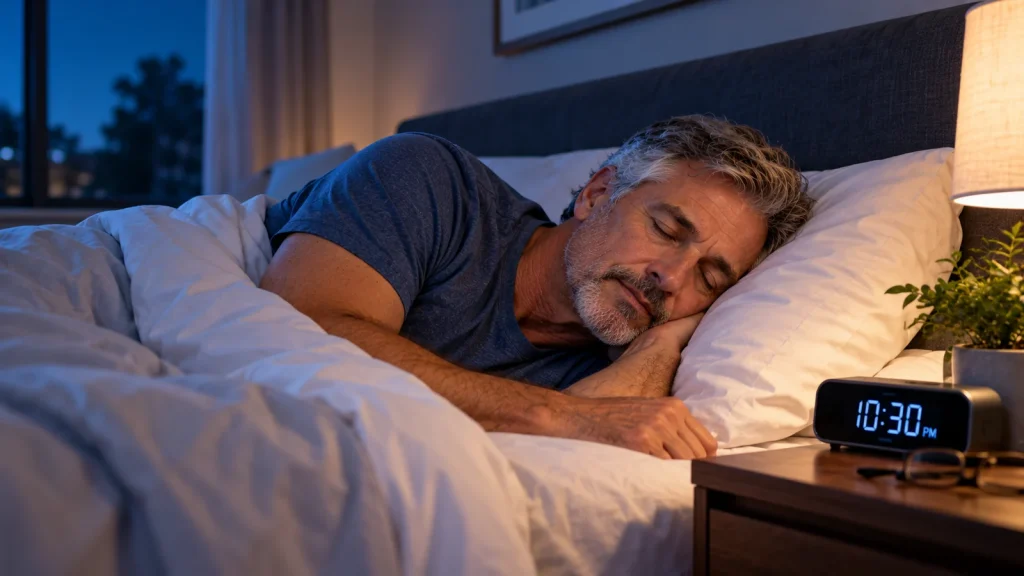
Could a poor night's sleep affect your testosterone levels? For men over 50, the connection between sleep and hormones is worth understanding, especially when fatigue, reduced sexual desire, or changes in physical performance become concerns.
Research suggests that sleep plays a role in normal testosterone regulation. However, the relationship is more complicated than the popular claim that sleeping longer automatically boosts testosterone.
Here's what scientific evidence actually tells us about sleep duration, sleep apnea, testosterone levels, and healthy aging.
How Are Sleep and Testosterone Connected?
Testosterone is produced primarily in the testicles under the control of hormonal signals from the brain. Its concentration in the bloodstream changes throughout the day and is influenced by the sleep-wake cycle.
In men who follow a conventional nighttime sleep schedule, testosterone levels are generally higher in the morning and tend to decline later in the day.
Sleep itself contributes to this daily pattern. Research indicates that testosterone concentrations typically rise during sleep, with the timing and continuity of sleep playing important roles.
This is one reason clinicians usually recommend morning blood samples when evaluating possible testosterone deficiency.
However, hormone regulation also depends on age, body composition, medications, illness, and other factors. Sleep is one part of a larger biological system.
Can Sleep Deprivation Lower Testosterone?
Some experimental studies suggest that insufficient sleep can reduce testosterone concentrations, particularly when sleep restriction is substantial or repeated.
In a small 2011 study published in JAMA, researchers examined healthy young men after a week of restricted sleep. Daytime testosterone concentrations were lower during the restricted-sleep condition.
The findings attracted attention, but the study involved a small number of young participants. It does not establish that every older man will experience the same hormonal response.
Other research has produced mixed results, particularly when comparing partial sleep restriction with complete sleep deprivation or examining different measurement times.
Overall, the evidence supports a relationship between sleep and testosterone regulation, but the size and consistency of the effect remain uncertain.
What the evidence means: Chronic sleep loss may interfere with normal hormonal regulation. However, researchers cannot reliably predict how much an individual man's testosterone will change from losing or gaining a specific number of hours of sleep.
Does Sleep Quality Matter as Much as Duration?
Sleep duration is important, but the number of hours spent in bed does not tell the whole story.
Frequent awakenings, irregular sleep schedules, and untreated sleep disorders may reduce restorative sleep even when someone spends enough time in bed.
Testosterone regulation is connected to sleep timing and continuity. However, scientists have not established a simple formula linking a particular amount of deep sleep or REM sleep to a predictable testosterone increase.
Consumer sleep trackers can provide useful estimates of sleep patterns, but their sleep-stage measurements cannot diagnose hormonal problems.
For most adults, including many men over 50, a reasonable starting point is aiming for approximately seven to nine hours of sleep per night, while recognizing that individual needs vary.
Sleep Apnea and Testosterone: What Do Studies Show?
Obstructive sleep apnea occurs when the upper airway repeatedly narrows or closes during sleep, disrupting breathing and sleep continuity.
Common symptoms include loud snoring, breathing pauses noticed by a partner, excessive daytime sleepiness, and morning headaches.
Some observational studies have found lower testosterone concentrations in men with obstructive sleep apnea. However, the relationship is difficult to interpret.
Obesity, older age, and metabolic health conditions are associated with both sleep apnea and lower testosterone levels. These overlapping factors can influence study findings.
Furthermore, treating sleep apnea with continuous positive airway pressure (CPAP) does not consistently increase testosterone levels in clinical research.
That does not make sleep apnea treatment less important. Appropriate treatment can improve breathing during sleep, daytime functioning, and other health outcomes.
Men who suspect sleep apnea should seek medical evaluation rather than assuming testosterone treatment will resolve their symptoms.
Why Poor Sleep Can Resemble Low Testosterone
Sleep problems and testosterone deficiency can produce overlapping complaints, including:
- Persistent fatigue or low energy.
- Reduced sexual interest.
- Difficulty concentrating.
- Lower motivation or changes in mood.
- Reduced exercise performance or recovery.
These symptoms are not specific to either condition. Depression, thyroid disease, anemia, diabetes, and medication effects may also contribute.
For example, a man who wakes up exhausted despite spending eight hours in bed may have a sleep disorder rather than a hormone deficiency.
Similarly, someone with persistent reduced libido may need evaluation of sleep, emotional health, medications, and testosterone when clinically appropriate.
Identifying the underlying cause matters more than assuming one explanation fits every symptom.
Does Better Sleep Increase Testosterone After 50?
Improving sleep is worthwhile for cardiovascular health, emotional well-being, attention, and everyday functioning.
But evidence that better sleep consistently raises testosterone in men over 50 is limited.
Some men may experience improvements in hormone regulation after correcting severe sleep deprivation or addressing contributing health conditions. Others may notice better energy and sexual well-being without a meaningful change in testosterone measurements.
Importantly, better sleep is not a proven treatment for every form of male hypogonadism.
Testosterone deficiency caused by certain testicular or pituitary disorders requires medical evaluation and may need treatment beyond lifestyle changes.
Practical Ways to Support Healthy Sleep
Although sleep habits cannot guarantee higher testosterone levels, they can improve sleep quality and support general health.
Maintain a Consistent Schedule
Try to go to bed and wake up at approximately the same times each day. Regular timing helps support the body's sleep-wake rhythm.
Make the Bedroom Sleep-Friendly
A quiet, dark, comfortably cool room may make it easier to fall asleep and remain asleep.
Be Mindful of Caffeine and Alcohol
Late-day caffeine can delay sleep, while alcohol may disrupt sleep continuity despite initially causing drowsiness.
Stay Physically Active
Regular exercise supports physical health and may improve sleep. Choose activities that match your fitness level and medical circumstances.
Address Persistent Nighttime Awakenings
Frequent urination, pain, medication effects, or breathing disturbances may interrupt sleep. Persistent problems deserve assessment rather than simply accepting them as inevitable with age.
Avoid Unproven Testosterone Boosters
Supplements marketed as sleep-based testosterone boosters often make claims that exceed the available evidence. Some products may also interact with medications or contain inadequately tested ingredients.
When Should Testosterone Be Tested?
Testosterone testing may be appropriate when a man has persistent symptoms or signs compatible with hormone deficiency, such as a noticeable reduction in libido, fewer spontaneous morning erections, or unexplained loss of bone density.
Fatigue alone is not enough to establish a testosterone problem.
According to the Endocrine Society, diagnosis requires compatible clinical findings and consistently low testosterone concentrations confirmed by appropriate testing.
For men with conventional sleep schedules, total testosterone is generally measured in the morning, with a repeat measurement on another day when the initial result is low.
Men who work night shifts or follow unusual sleep schedules should tell their clinician, since testing may need to be timed according to their sleep pattern.
A clinician may also investigate sleep apnea, metabolic disease, medications, or other possible explanations for symptoms.
When to Talk to a Healthcare Professional
Seek medical advice if you regularly wake feeling unrefreshed, experience significant daytime sleepiness, or have persistent sexual or energy-related concerns.
Loud snoring accompanied by witnessed breathing pauses is another important reason for evaluation.
When sleep problems and possible testosterone deficiency occur together, both deserve consideration rather than focusing exclusively on hormone levels.
Final Thoughts
Sleep and testosterone are connected, but the relationship is not as straightforward as many online claims suggest.
Research indicates that sleep restriction can affect testosterone under certain conditions, while sleep apnea and hormonal changes often share additional contributing factors.
For men over 50, protecting sleep is a sensible health priority. Yet better sleep should not be presented as a guaranteed testosterone treatment.
If symptoms persist, a medical evaluation can help determine whether the main concern involves sleep, hormone deficiency, another health condition, or a combination of factors.
Medical Sources
- Leproult R, Van Cauter E. Effect of 1 Week of Sleep Restriction on Testosterone Levels in Young Healthy Men. JAMA (2011).
- Wittert G. The Relationship Between Sleep Disorders and Testosterone in Men (2014).
- Endocrine Society. Testosterone Therapy in Men With Hypogonadism (2018).
- National Heart, Lung, and Blood Institute. Sleep Apnea.
- Centers for Disease Control and Prevention. About Sleep.